Making a tattoo is a significant commitment. It is a combination of art, self-expression, and body modification on a permanent basis. In Australia, where our tattoo culture is faring well and is diverse, the artist selection is key. Even though the majority of the professionals are highly competent and ethical, there are bad actors in the industry. The wrong choice of the artist may cause a bad outcome, risk to health, and regrets.
This is not a guide to identify the best artist; this is a research and relationship process. This is about protection. It’s your top-priority list to look at the red flags that are essential in order to notice when it is high time to thank them and turn around and leave. Your skin, health, and vision should be safeguarded at all costs.
Ways of Spotting an Unprofessional Vibe
Your initial encounter, be it online, cell phone, or face-to-face, determines the mood. The foundation of a safe tattooing experience is professionalism.
a) Lack of Communication
You receive slow, unclear, or scornful responses. They are not bothered to respond to simple queries regarding their process, pricing, and availability. An artist with professionalism believes in effective communication as the initial process of cooperation.
b) Pressure Tactics
These are limited-time offers, or forcing you to deposit before you are ready, or even upselling you to a bigger, more expensive piece of work, which does not actually have artistic support. It is not a consultative partnership but a sales tactic.
c) Absent a Proper Portfolio
In the digital world, there is no excuse. Unless the artist can easily demonstrate to you a book of healed work (new tattoos look beautiful on all), be suspicious. Look critically:
- Are the lines wavy or irregular?
- Is the shadowed area in patches, or is it blown out?
- Are the designs appropriate to the anatomy of the body?
- Are all pieces of the same, derivative style, and are they merely following Instagram trends?
d) Avoid a Yes Man
A really great artist is an honest consultant, too. When they offer to create a hyper-realistic portrait of stunning detail in a two-hour sitting on your ribcage, they are lying to take your money. They are expected to handle the expectations and give recommendations on what will suit in the long term.
Understand the Critical Failures
An in-person consultation will not be negotiable. Any omission of this is a scarlet letter.
a) When There Is No One To Consult With
They would have you simply email an image and a book. This demonstrates that they are not concerned with fit or placement or even working with you to create custom art.
b) Rushed Methods
When they look at your reference, write something in 30 seconds and say, Yep, easy, they are not putting money into the design process. It should be properly consulted:
Design Ideation: Share your idea, purpose, and style inclination.
Placement/ Anatomy: The way the design will move with the contours of the muscles of your body. They would desire you to make the stencil at the real location.
Size & Detail: The effect of size on detail and life.
The Process: Previewing how many sessions, with which approximate hours, and what should be expected in healing.
c) Lack of Custom Designs
When they do not want to draw your original idea because they will select some pre-drawn flash art off the wall, and then make it to fit you, that is, to be original with you, they do not feel competent or really want to draw you an original.
Things You Shouldn’t Negotiate With
In Australia, the health departments of the states and territories control tattooing, though the standards may differ. It is literally a matter of life and death to you. This is why the only policy that can be tolerated in this area is zero tolerance.
1) If the Studio Is Dirty
Look around. Are the floors clean? Is there clutter? Does the tattooing room contain any bare food or beverages? The working area must be a professional, not a messy environment.
2) Improper Setups
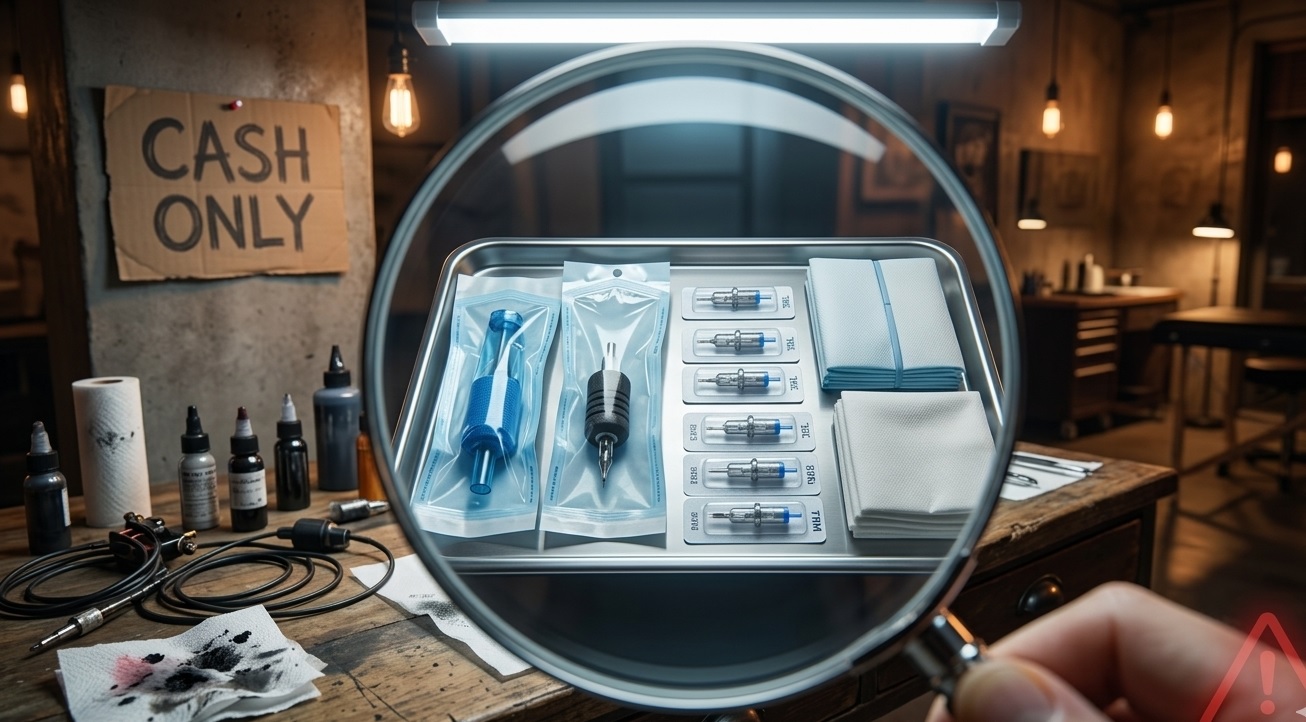
This is the largest and most threatening red flag. There are two things to notice before you sit in the chair:
- Do the artists have new single-use gloves?
- Do they unopen sealed packages containing single-use, sterilized equipment (needles, grips, ink caps, razors) before your eyes?
- Does the tattoo machine have a clear and disposable wrapping?
- Does the autoclave (a sterilizing machine) look visible, and do they sterilize their non-disposable equipment, such as metal needle bars? There is no need to be shy about their sterilization procedures: any professional will be happy to describe them.
3) Poor Hygiene
The artist is expected to be hygienic. They should tie back their long hair and should use good gloving technique (e.g., do not touch phones, doors, or even their face when they are gloved).
4) No Aftercare
In case they have not given clear and written instructions about aftercare (guidelines depending on the Australian climate and recommended use of products such as Sorbolene or recommended ointments, then they are failing their duty of care. The tattoo was not done when you came out of the chair; it was done when it had healed.
There are Money Traps
Tattooing is an art, and hard work does not come cheaply. Be careful not to accept a price that appears to be too good to be true because it nearly always is.
a) Vague Quote
Once consultation has taken place, a professional is expected to give an estimate price range or firm quote depending on the gas time. A setup of between 200 and 800 dollars would be an invitation to a bad surprise on the day.
b) Non-Refund of Deposit
Great, non-refundable demands are common and are fair. It rewards the artist with his or her time drawing. Yet asking 50-percent or more down payment, before you have even reviewed a sketch, is a big gamble.
c) Cash-Only Discounts
A large discount on cash that is considerably lower than their regular prices may be an indication that a small business is not operating within the system. A rightful, insured studio shall issue an appropriate receipt.
Hourly Rates That are Below the Market Rate by a Drastic Margin: In Australia, shop rates are variable, but a very low amount (e.g., less than $150/hr) will be indicative of inexperience, a lack of confidence, or the shop may be cutting corners when it comes to material and hygiene in order to keep the price down.
What Should Be Your Final Checklist?
- Go to Google reviews, Instagram feeds (seekout healed work!), and request personal referrals.
- It is never advisable to book a big piece without visiting the artist and viewing the studio physically.
- When it comes to the consultation, you have a feeling something is amiss, either in the air, the hygiene, or their manners, respect it. You have no obligation to do so.
- It is essential that you have your deposit amount, quote, description of designs, and length of appointment confirmed by email or booking form.
The ethical tattoo shops in Australia, the ones that have been committed to the trade, plus to their customers, want you to be informed. They work in an open manner since they do not have anything to hide.
You not only escape a negative experience by not going into the red flags, but you also decide to patronize the artists and stores that produce the best art, safety level, and professionalism. The beautiful, healthy piece of art you have on your skin will be thanking you later on when you are in the future.
FAQ
1. What is the biggest hygiene red flag related to a tattoo parlor?
The red flag that is the most crucial to be aware of is whether the artist does not unseal single-use, sterilized equipment, such as needles, grips, and ink caps, in any of the sealed packages in your presence. Besides, wrap the tattoo machine in a disposable barrier. Never compromise on this.
2. Should we avoid cheap tattoos?
Yes, a price that is well below the average market price is a big red flag. Very low hourly rates can imply either that the artist is new and therefore inexperienced, or that the shop is skimming dangerous corners on hygiene, quality ink, and sterilization to ensure lower costs.
3. Should we worry when there is no person for consultation?
Absolutely. Not having a consultation would imply that the artist is not examining your skin, explaining how it will fit with the anatomy of your body, or effectively working with you to design something custom. This nearly always results in bad positioning, scaling problems, and a design that you feel less at one with.
4. What should we do when the artist is asking for a large deposit?
Walk away. Taking a typical, decent deposit (10-20 percent) in order to book is usual. But insisting on having half or halfway, and you have not even seen a sketch yet, is a bully-boy sell and a great financial gamble on your part.
5. Can we ask about the sterilization process?
Not only can you, but you also must. The real professional will be proud and glad to demonstrate how they use an autoclave on the metal parts and provide you with closed and single-use equipment. Defensiveness or hesitation is an obvious indication to move out.

Marco Ventura is a globally award‑winning tattoo artist based in Australia, renowned for his expertise across diverse tattoo styles. As the founder of his own studio, he leads a talented team dedicated to turning personal stories into striking body art. Passionate and visionary, Marco helps clients worldwide bring their tattoo dreams to life. He also shares his thoughts about tattoos and how things can be better for the clients through engaging blog posts.