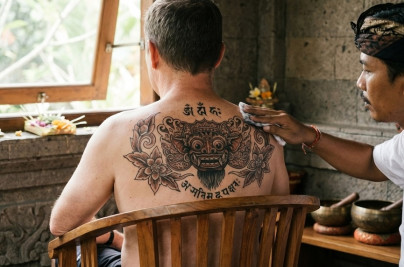
You have made up your mind to take the jump into hyper-realistic tattooing. You have discovered your artist, browsed through his portfolio, and are fantasizing about your fabulous portrait or landscape right onto your skin. It is an unbelievable ride; however, realism has its own rules.
Regarding the marathon sessions, the science of aging ink, the point is to be ready to walk out of the studio not only with a tattoo, but with a master piece that you will enjoy and cherish for decades. We are going to de-mystify the process and provide you with some knowledge.
What is the Test of Time for Realism Tattoos?
The new hyper-realistic tattoo is the achievement of the art-craft- sharp edges, smooth gradations, and unbelievable depth. Yet skin is a breathing, moving canvas. What will you find in 10 years then?
The main issue is the blurring or spreading of fine details or making them. With time, the particles of ink below the skin are slightly diffused. This implies that the smallest of details, such as separate eyelashes, small texture pores, or minute hair strands, can soften or fuse. The contrast can be decreased, and extremely light passes of color can be more noticeably faded. It is not a weakness, as it is a natural aging process of a tattoo.
Ways of Preventing Additional Blurring and Prolonging Longevity
Take Help from An Expert
Realism involves technical skills. Your artist should be familiar with the depth at which to tattoo so the ink does not move too much, causing unnecessary trauma.
Importance of Boldness
The key areas need to have their lines and contrast bolder, and the best realism artists are tactical with this. This gives a scaffolding upon which the design clings as it grows old.
Decide on the Size of The Tattoo
Demand is of a reasonable size. That photorealistic image of a face must have a sufficient amount of skin real estate to provide it with the capability to breathe and age beautifully. Compression of a complicated picture into a small space is a roadmap to a foggy future.
Protection Against the Sun
Your tattoo has an ultimate rival, UV radiation. It decomposes the ink pigments, resulting in premature fading and discoloration.
How to Manage Pain During Long Sessions?
Realism tattoos do not come fast. It is typical to have 6, 8, or even 10-hour sessions to attain such detail. It is important to be prepared both mentally and physically.
Your Body Needs Fuel
Work it like a sports contest. Have a big, nutritious meal one hour before a session. Carry snacks that contain lots of protein, nuts, and lots of water or electrolyte drinks. Avoid caffeine, which will result in jitteriness.
Mind Over Everything Else
It works wonders to distract. Pack on podcasts, audiobooks, or a stack of songs. Certain clients can be helped with meditation or controlled breathing.
Importance of Communication
A good artist hopes that you are okay. Create an indicator whether you require a desperate break. They also have time to change their method or to work somewhere that is not so sensitive, in case you are hitting a wall.
Should We Use Numbing Creams?
There are some numbing creams (over the counter) that can help, particularly initially. Importantly, negotiate this with your artist early enough. Other creams alter the skin texture and may have an influence on their tattooing capacity.
The Difference Between a New Method and An Old Method
Gone are the days of mandatory plastic wrapping, over-oozing. The introduction of medical-grade adhesives, such as the Saniderm or Tegaderm, has helped revolutionize the aftercare of many.
Old Method
This procedure is to be removed after several hours, after which one has to wash and moisturize the skin often. It subjects the new tattoo to air and friction very soon, and this may enhance scabbing.
New Method
This is a non-opaque, breathable bandage that the artist lays down. It remains for a number of days, forming a protective blanket. It secures the natural healing fluids of your body, and this ensures a good, moist healing condition of the tattoo. This typically results in:
Less scabbing and peeling
Less susceptible to superficial infection.
Simpler aftercare during the first serious days.
In the majority of instances and in the majority of tattoos, the contemporary adhesive films can be a better way to heal. Nevertheless, there are a few people who possess extremely sensitive skin and therefore may react to adhesives. Always do what your artist tells you to because he or she knows what will be best on the job that he or she has done.
Preparation of the Skin
In color portraits, you do not have a blank white sheet on which to paint your skin; it is a filter. The pigments will react with the undertones of your skin (cool, warm, neutral, or olive).
- Cool Undertones (Pink, Red, Blueish): Can be used to slightly put out warm colors, such as reds and oranges, but make cool colors, such as blues and purples, stand out.
- Warm Undertones (Yellow, Golden, Peach): Will make warm colors appear better, but will also give a very pale blue or purple a slight tint of grey or green.
The only difference is that a really good realism artist will correct your skin color. They will also work out their pigment combinations, with the knowledge of how the ink will sit on your individual canvas and how it will dry. Believing in their knowledge, they observe the communication between ink and skin on a daily basis.
Entering your realism tattoo appointment ready makes the process a matter of anxiety rather than confident cooperation. You are now an informed co-creator of a work of art that was not only to amaze you on day one, but also to become a beautiful companion during your life.
FAQ
Do realistic tattoos age properly?
They can soften over time. Nevertheless, by selecting a skilled artist, making sure the design is big, and rigorous use of sunscreen will significantly save the detail and contrast over the decades.
How to prepare for a long tattoo session?
Eat a huge meal, carry water, and snacks. Wear a comfortable outfit, distractions such as headphones, and talk freely with your artist about the requirements of a break.
Can Saniderm work better than plastic wrap?
For most people, yes. It is a medical-grade adhesive bandage that is used to remain for days and forms a perfect moist healing space that minimizes the risk of scabbing and infection as opposed to the outdated wrap-and-wash system.
Is it possible to create a color portrait on dark skin?
Absolutely. A good make-up artist will match the shade of your skin. It is important to apply pigments that are saturated and opaque enough so that the design can be accentuated with beautiful contrast.
Should we use numbing creams for long sessions?
You can, and you must negotiate it with your artist long before you have your appointment. Certain creams alter the feel of the skin and may disrupt the procedure and end product of tattooing.

Marco Ventura is a globally award‑winning tattoo artist based in Australia, renowned for his expertise across diverse tattoo styles. As the founder of his own studio, he leads a talented team dedicated to turning personal stories into striking body art. Passionate and visionary, Marco helps clients worldwide bring their tattoo dreams to life. He also shares his thoughts about tattoos and how things can be better for the clients through engaging blog posts.