A tattoo is not just a kind of body art. It’s a total statement of identity, creativity, and personal style. But there are also health and hygiene issues to consider when getting tattoos, as the needles and ink are injected into the skin. The public health regulations, infection-control requirements, and professional expectations of Australia have helped to build a reputation for high standards in the tattoo industry.
Australian tattoo parlors are regulated to minimize health risks, from sterile equipment to single-use needles, and are overseen by local councils. Though not all tattoos are risk-free, there are some precautions that make Australia a safe place to get a tattoo.
The “Strong Tattoo Hygiene Regulations” for Australia
Australia has set public health standards that apply to businesses that carry out skin penetration procedures, whereas some countries may have a wide range of regulations or public health standards are loosely enforced.
While requirements vary from state to state, tattoo parlors typically must:
- Inform or register their business with local authorities.
- Ensure compliance with health and safety standards prior to operation.
- Keep work areas and premises clean and hygienic.
- Practice infection control of equipment and surfaces.
- Make sure employees are aware of safe tattooing procedures.
- Work cooperatively with inspections and enforcement.
These requirements establish accountability. No reputation or customer reviews alone will be enough to support a studio—there are public health requirements that must be adhered to.
Sterilization: The Cornerstone of Safe Tattooing
One of the most important aspects of tattoo safety is sterilization. The needles penetrate the skin, making it a potential route of transmission of blood-borne infections if the needles are contaminated with blood.
This risk is minimized through the use of a professional Australian tattoo studio that adheres to safety measures.
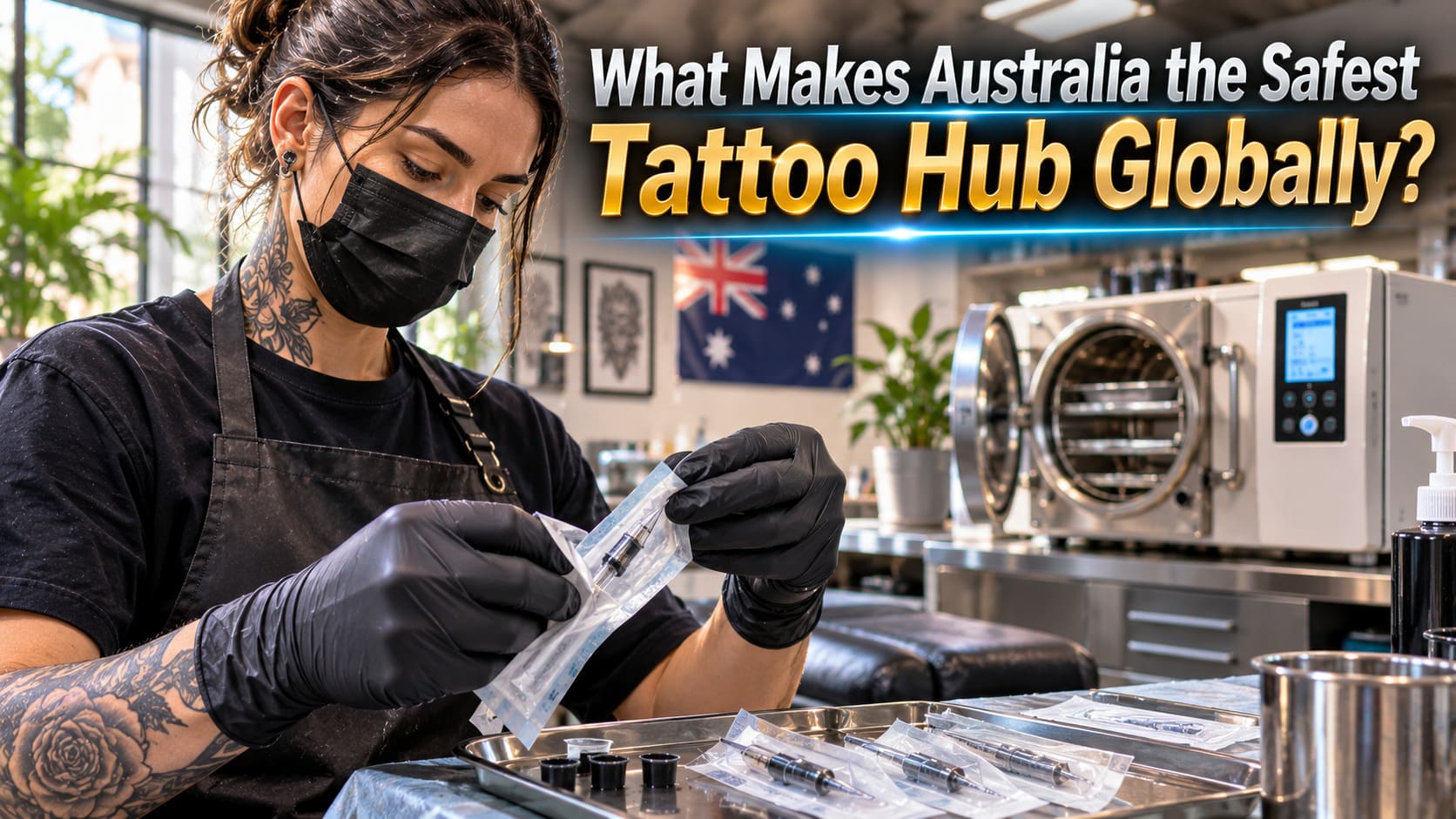
Autoclaves, Medical-Grade Sterilization
Equipment that comes in contact with skin should be sanitized for re-use. Studios often use autoclaves where suitable reusable instruments are used.
An autoclave is a machine that uses steam that is under pressure and at a controlled temperature to kill microorganisms such as bacteria, viruses, and spores.
Sterilization is not just a matter of putting the equipment in a machine. Before use, instruments need to be cleaned, prepared, packaged, and processed as per the manufacturer’s instructions and relevant standards. Appropriate sterilization records should also be kept in studios, and equipment should be monitored for proper functioning.
Single-Use Needles and Cartridges
A lot of contemporary tattoo artists use disposable needle cartridges or pre-sterilized needles.
These products are for single use only and should be sealed and opened just before use. They should be disposed of in a proper sharps container after being used.
This will help to avoid cross-contamination between clients.
Importantly, disposable needles aren’t risk-free for all infections. Artists need to keep work surfaces clean, have the proper barriers, and follow safe handling guidelines.
Maintain Clean Work Areas and Personal Cleanliness
A safe tattoo parlor should be well organized, clean, and professionally upkept. Needles are not the only aspect of Australia’s health needs.
The tattoo artists should use proper hand hygiene and be dressed in clean protective clothing and disposable gloves. Gloves should be changed anytime contamination occurs, including any surface not previously cleaned.
Studios should also:
- Disinfect and clean tattoo beds, benches and equipment between clients.
- Use new protective coverings for each procedure.
- Ensure that sterile equipment is separated from contaminated equipment.
- Don’t return unused ink to the original container – use individual caps instead.
- Safely dispose of contaminated waste and sharps.
- Ensure proper hand washing facilities.
These practices help to decrease the risk of infections like hepatitis B, hepatitis C and bacterial skin infections.
Licensing, Training and Professional Accountability
The industry of tattooing is regulated in Australia by state and territory laws, and the registration, inspection and enforcement functions are often delegated to local councils.
But it’s crucial to remember that there is no uniform tattoo licence in Australia.
For example:
- In Queensland, Higher-risk personal appearance services must have an appropriate business licence, and tattoo operators must have the relevant infection control competency.
- Registration as a tattoo parlor is required with the relevant local council, and adherence to the Public Health Regulation 2022 is required in NSW.
- Victoria: Premises for tattooing and skin penetration must be licensed as required by public health legislation and comply with infection control standards.
Such frameworks are useful to set minimum standards for businesses and practitioners.
Yet, the fact that the artist is registered does not mean that it is of artistic quality, nor does it constitute full approval of every procedure. Clients must consider an artist’s experience, portfolio, and communication skills, in addition to the artist’s studio’s hygiene.
What Makes Australia So Special?
The safety of getting a tattoo can differ greatly from one country to another, one city to another, and even one studio to another. Some foreign countries have great professional tattoo parlors, but others may lack enforcement, limited resources for inspecting parlors, or poor training on the part of the people who work in them.
The strength of Australia is that the supervision and control of public health is structured.
Users can enjoy:
- Created legal standards for businesses with skins/hide wall.
- Global authority registration & inspection systems.
- These include infection control advice, which is made in accordance with recognized standards.
- Sterile equipment and safe disposal of waste.
- Greater accountability in the event of failure of a business.
This doesn’t mean all Australian studios are safe and all overseas studios are unsafe. An outside studio might keep their studio very clean, but the same could not be said for an Australian business.
The tangible difference lies in the regulations and their enforcement and the nature of professional accountability.
If you are thinking about getting a tattoo in another country, you should still check the credentials of the tattoo artist, the cleanliness of the studio, and ask any questions before getting a tattoo.
Here are Some Tips to Share with Clients About the Safety of Tattooing:
Clients should always be involved in their own health care, even in a well-regulated world. Here are some quick tips to keep in mind before making your appointment.
Before Your Tattoo
- Check the studio’s registration – Inquire if the business is registered in accordance with local council requirements.
- Research the artist: Check out healed tattoo images, customer reviews, and professional experience.
- Inquire about sterilization: Check if the reusable items are sanitized and what happens with disposable needles.
Whilst no country can guarantee absolutely no risks come with getting a tattoo, we do have some very good regulations in place for our customers.
Choosing a reputable studio and knowing how they ensure safety will make a big difference whether you’re getting your first tattoo or adding to your collection!
FAQ
- Why do tattoo studios in Australia feel safe?
Australia has public health guidelines for tattooing. These include infection control, local council, and sterilization requirements. In turn, this helps to reduce the risk of infection for clients and encourage good hygiene. Whether a tattoo is safe will ultimately depend on whether the guidelines are followed.
- How do Australian tattoo studios prevent infections?
Professional tattoo studios will use sterile needles and single-use ink cartridges. Reusable tools will be properly sterilized. The artist will wash their hands and wear gloves. The tools will be disinfected, and any waste will be disposed of properly. This will help reduce the risk of blood-borne infections and bacteria.
- How can new clients check whether a tattoo studio is safe or not?
When getting a tattoo, you should check the local registration of the studio. You should also look around to make sure it is clean. Ask them about their sterilization process. Make sure that needles are opened from sealed packaging. The artist should be using new gloves, and the tools should be used hygienically. Looking through their portfolio, checking reviews, and following aftercare advice will help create a safer experience.

Marco Ventura is a globally award‑winning tattoo artist based in Australia, renowned for his expertise across diverse tattoo styles. As the founder of his own studio, he leads a talented team dedicated to turning personal stories into striking body art. Passionate and visionary, Marco helps clients worldwide bring their tattoo dreams to life. He also shares his thoughts about tattoos and how things can be better for the clients through engaging blog posts.